On-demand marketplace software · Asset sale

Software-only asset sale · Open to offers

On-demand services marketplace software

Customer and expert mobile apps, an operations dashboard, a backend API and website source, built to take a service booking from request to completion.

This is a software asset, not a business. The company, brand and domain are excluded, and the product has not generated revenue. A buyer rebrands, configures and launches it.

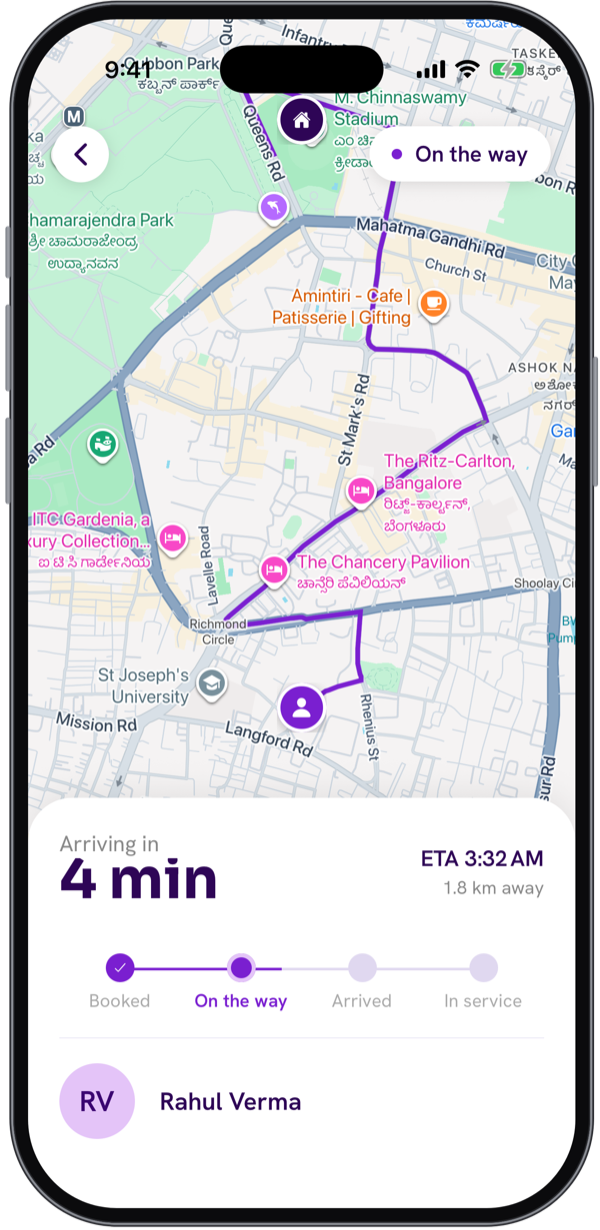
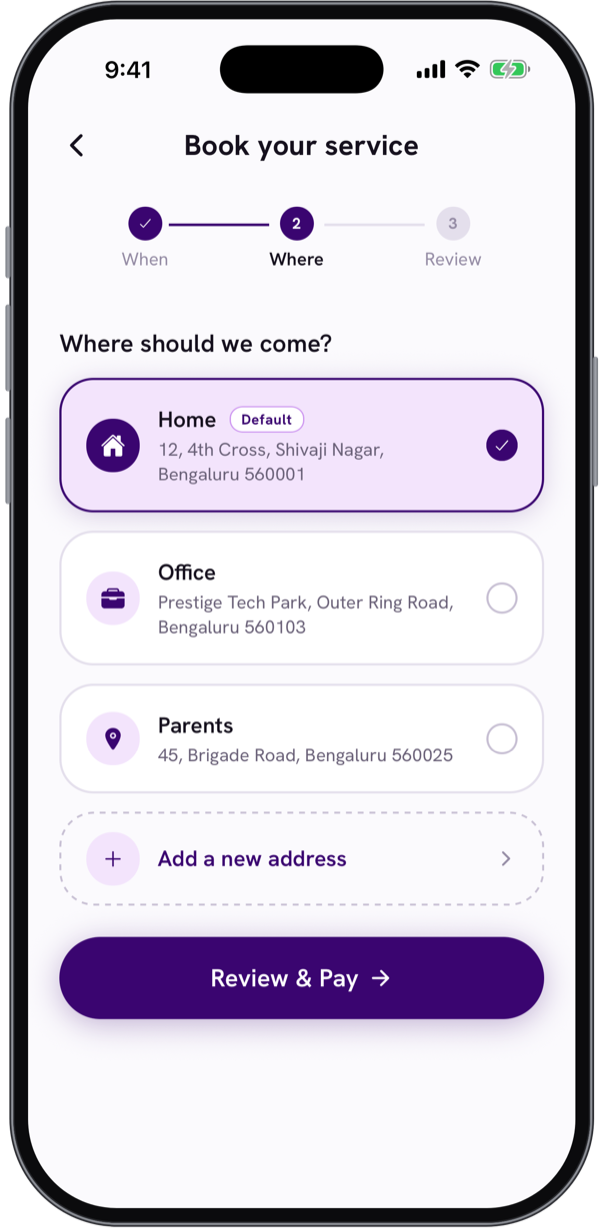
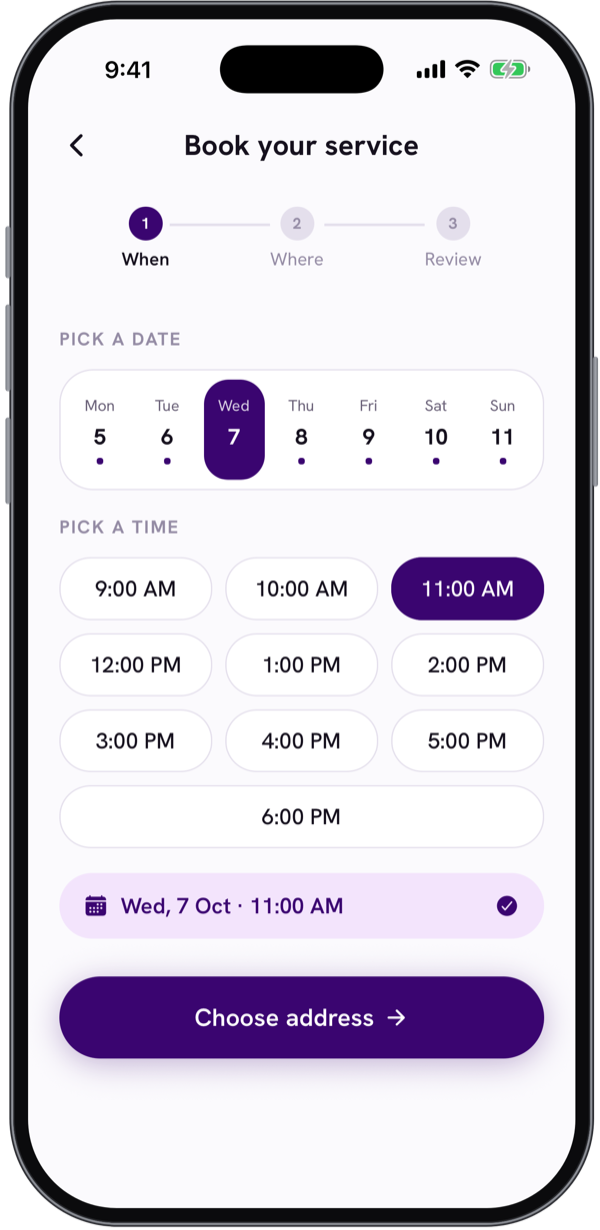
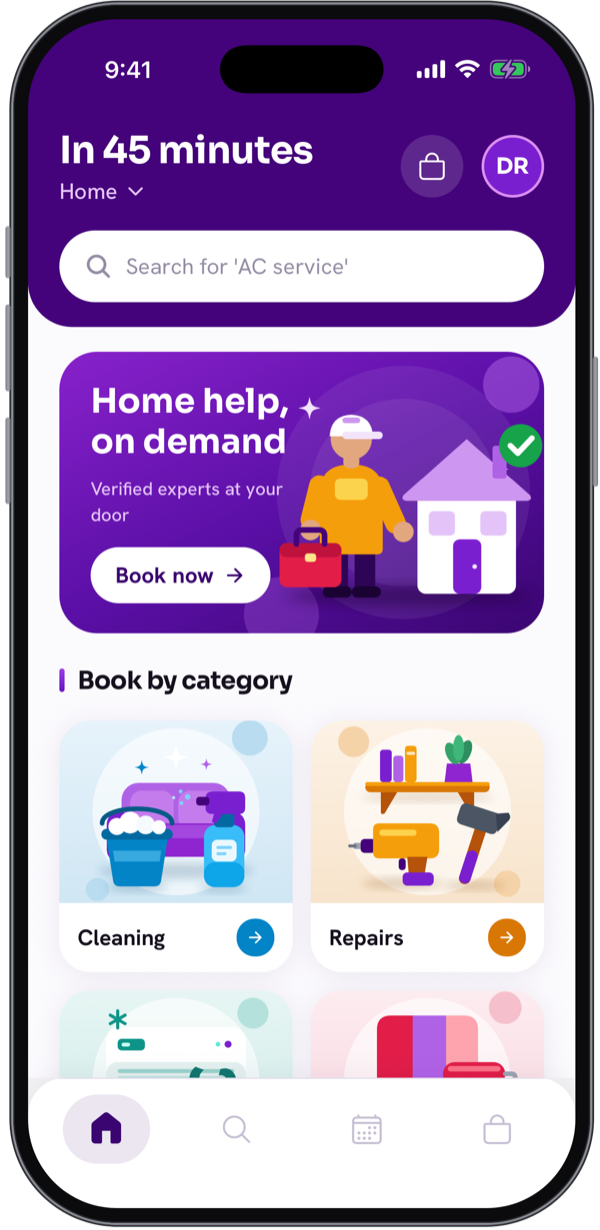
Illustrative customer app screen for choosing a booking date and time slot Illustrative customer app home screen with a services hero and category cards Illustrative customer app live tracking screen with a route map and estimated arrival

Illustrative demo views with sample content. They are not real transactions or evidence of revenue.

The platform

Four components that work together

A customer requests a service, an expert fulfils it, and an operations team runs the catalog, assignments and payments. Each side has its own interface on a shared backend.

2 mobile appsCustomer and expert, React Native with Expo, targeting iOS and Android
Admin dashboardNext.js web app with 18 sections for operations, catalog and governance
Rails 8 APIThree isolated access scopes: customer, expert and team
Website sourceNext.js public site source files
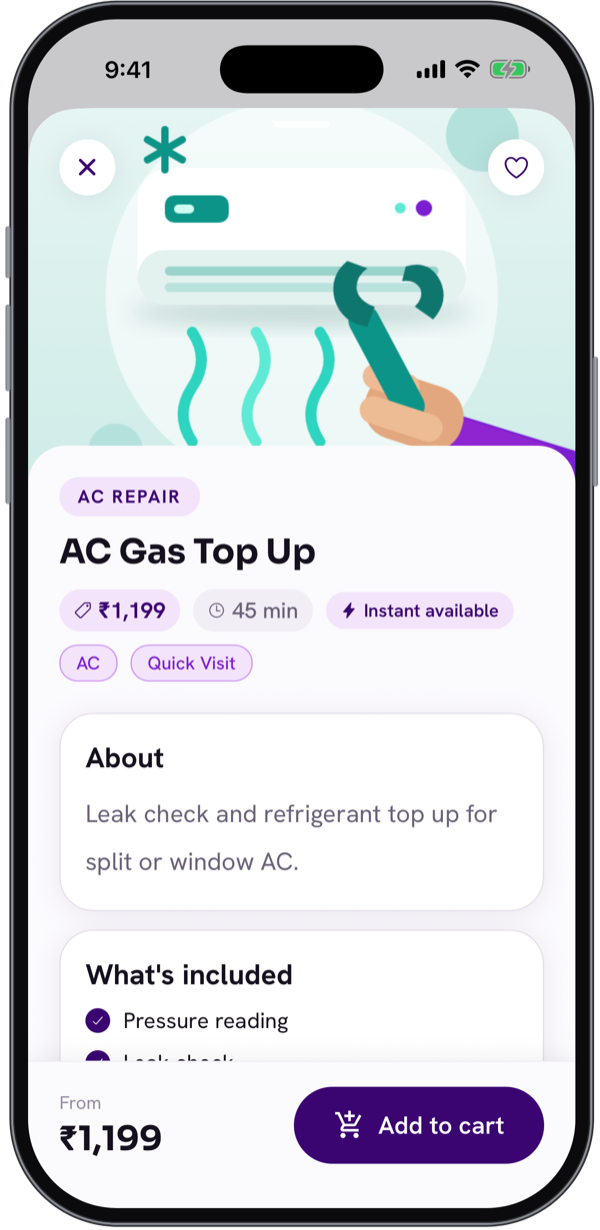
Illustrative service detail screen showing an illustrated header, price, duration and what is included
Customer app · service detail (sample content)
Customer app

Discover, book, pay and follow the job

Customers browse a catalog, pick a slot or request an instant order, and follow the job until it is done.

  • Catalog with categories, packages and favourites
  • Search and service detail pages
  • Slot booking with saved addresses
  • Instant orders dispatched to nearby experts
  • Cart, promo codes and online checkout
  • Reschedule and cancel flows
  • Live tracking with route and ETA
  • Support tickets and push notifications
Expert app

Run the day and track earnings

Experts see assigned work, move each job through its stages and review what they have earned.

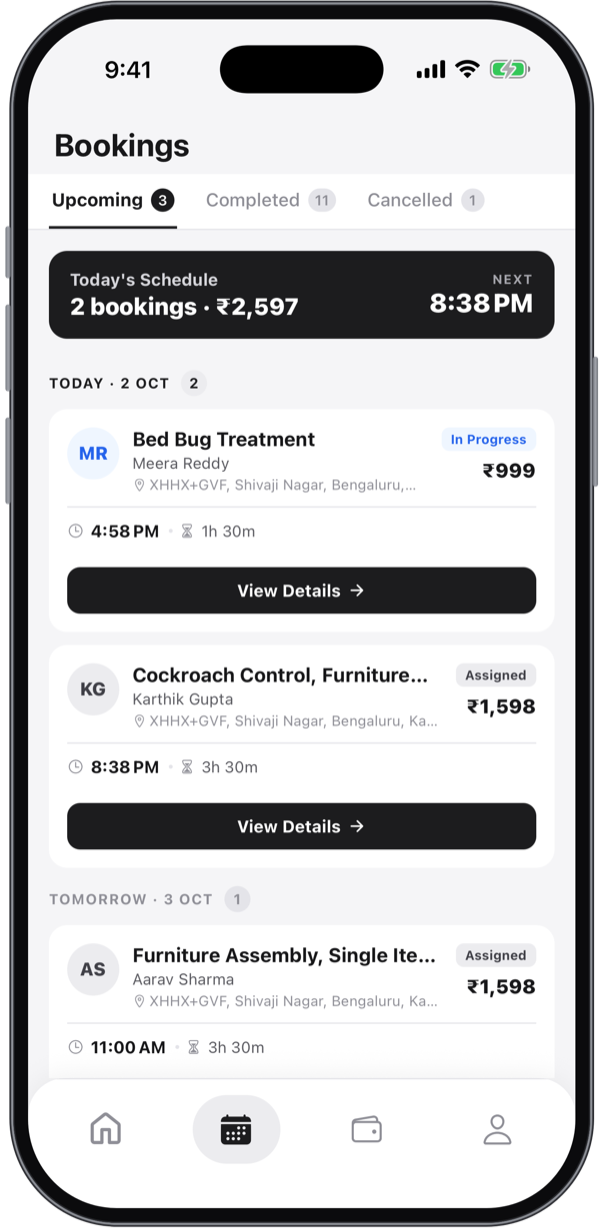
  • Bookings by status and a day calendar
  • Job actions: depart, arrive, start, complete
  • Instant order offers with location permission flow
  • Availability status and work information
  • Earnings, payout requests and bank details
  • Invoices and invoice items on completed jobs
  • Support tickets and push notifications
  • Force-update and maintenance screens
Illustrative expert app bookings screen with a list of today's jobs and statuses
Expert app · bookings (sample names and amounts)
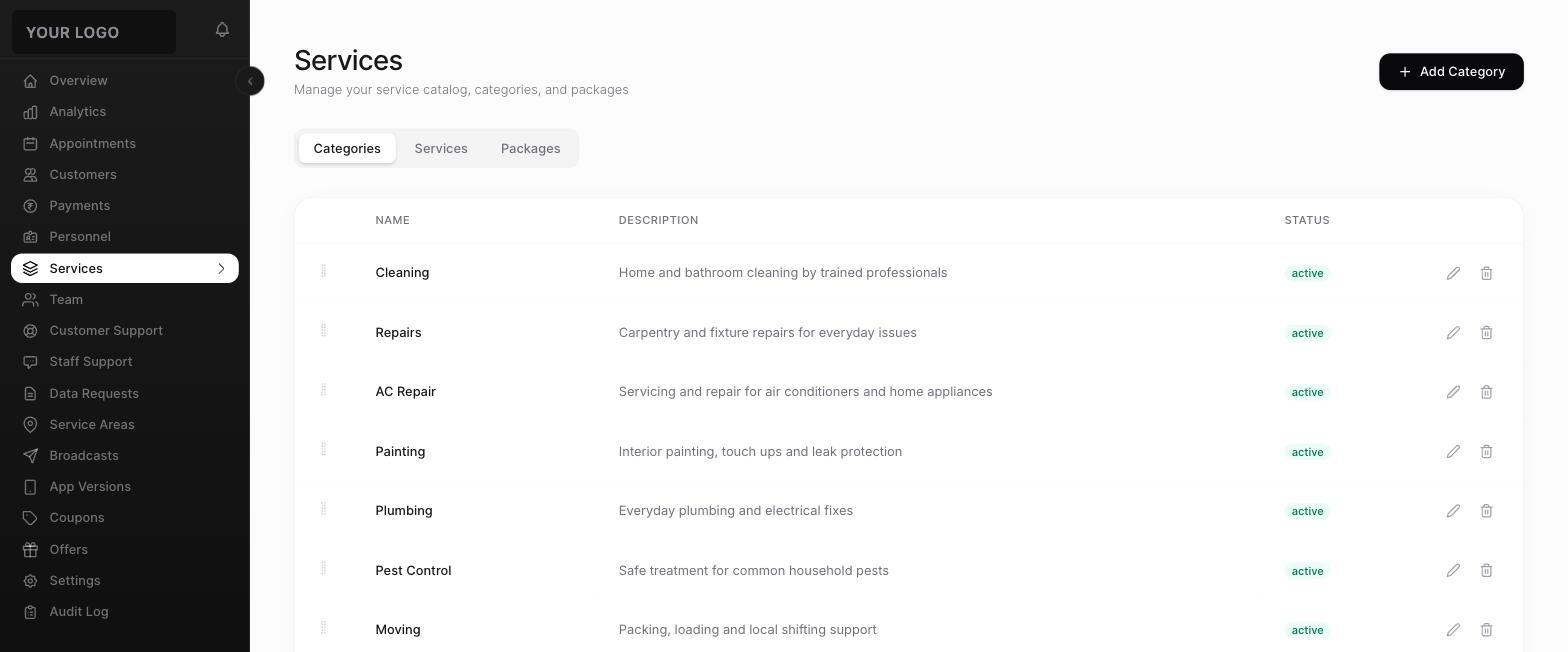
Illustrative admin dashboard services page listing catalog categories with descriptions and status
Admin dashboard · catalog management (sample categories)
Admin dashboard

Operate the marketplace

One web console for the team, with role-based access to each area.

  • Overview, analytics and appointments
  • Customers, experts and payments
  • Services, categories, packages
  • Coupons, offers and service areas
  • Customer and staff support desks
  • Push broadcasts and app versions
  • Team roles, settings and audit log
  • Data requests handling
Backend and website

One API behind every interface

The Rails API serves all three clients with separate authentication for customers, experts and the team. The Next.js website source is included as a starting point for a public site.

Current workflows

From first tap to completed job

These are the flows implemented today. Screens use sample services, addresses and prices.

Service detail screen1

Choose a service

Detail page with price, duration and inclusions.

Date and time slot picker2

Pick a slot

Available times come from the API for the chosen date.

Address selection step3

Set the address

Saved addresses or a new one, then review and pay.

Live tracking map with route and ETA4

Track the expert

Route, ETA and job stage while the expert is on the way.

Booking lifecycle (state machine in the backend)

  1. pending
  2. →
  3. confirmed
  4. →
  5. assigned
  6. →
  7. en route
  8. →
  9. in progress
  10. →
  11. payment pending
  12. →
  13. completed
  1. requesting
  2. →
  3. broadcasting to experts
  4. →
  5. assigned
  6. →
  7. continues as above

A booking can also end as cancelled or no show. Operations staff can assign or reassign experts from the dashboard, and the customer and expert apps receive live updates.

Architecture

Clients, one API, shared services

Clients

  • Customer appReact Native, Expo, React Navigation
  • Expert appReact Native, Expo
  • Admin dashboardNext.js, React, Tailwind CSS
  • WebsiteNext.js source

Rails 8 API

  • Three scopescustomer, expert and team tokens cannot cross over
  • Sign-inphone one-time password for customers and experts, Google sign-in for the team
  • Role permissionscapability-based access for team members
  • Audit loggingfor significant changes

Data and services

  • PostgreSQLschema and migrations included
  • Redis and Sidekiqbackground and scheduled jobs
  • ActionCablereal-time booking updates
  • Integrations in codeRazorpay, Google Maps, MSG91, object storage, push notifications

Conventions

Prefixed public IDs, money stored as integer amounts, soft deletion, serializers per resource and an explicit booking state machine.

Tests and tooling

The backend includes RSpec specs across models, requests, services, jobs and channels, plus Rubocop and Brakeman setup. We recommend re-running them as part of diligence.

Regional fit

The payment and SMS integrations are India-oriented. A buyer targeting another region would replace or extend those providers.

Possible markets

Configure it for a service category you know

The catalog, categories, packages, service areas and pricing are data, so a buyer can configure them for a chosen vertical.

  • Home cleaning
  • Repairs and maintenance
  • AC and appliance service
  • Painting
  • Plumbing and electrical
  • Pest control
  • Moving and packing
  • Wellness
  • Tutoring
  • Local delivery

These are directions, not claims. No category-specific content, supply of experts, licences, compliance work or demand comes with the software.

Monetization to test

Revenue levers, and how much is already built

A marketplace earns where money moves. We mapped each lever to what the software supports today and what a buyer would still need to build, so the starting point is honest and the experiments are clear.

1Customer paysPay now or pay later, optional advance amount, coupons and tax setting applied
2Platform records itPayment, invoice and invoice items per booking, visible in the dashboard
3Expert is rewardedCommission or salary type per expert, earnings view and payout requests
In the softwarePartly in the softwareWould need building
In the software

Commission on completed jobs

Take a share of each job an expert completes.

Today
Each expert record can be commission-based (with a rate) or salaried. Earnings and payout requests are tracked.
To test
What share experts accept, and its effect on expert retention and completion rate.
In the software

Advance booking amount

Collect part of the price up front to secure the slot.

Today
Services and packages carry an advance amount, and checkout supports pay now or pay later.
To test
Effect on no-shows against the drop in conversion.
In the software

Cancellation and late fees

Protect expert time with rules the operator controls.

Today
Settings cover the cancellation window, an instant-order cancellation fee, a late-cancellation deduction and a late-payment surcharge.
To test
Fee levels that cut cancellations without raising disputes.
In the software

Packages and bundles

Raise basket size with grouped services.

Today
Packages hold a bundle price against a list price, with badges and their own advance amount.
To test
Which bundles lift order value and repeat bookings.
In the software

Coupons and offers

Acquire and bring back customers on purpose.

Today
Flat or percentage coupons with minimum order, usage and per-customer limits, expiry, free-service rewards and public or private visibility. Offers can be shown in the app.
To test
Cost per acquired booking, and repeat rate after a first coupon.
Partly in the software

Instant dispatch premium

Price speed for customers who need help now.

Today
Instant orders can be switched on, with offer timeouts and widening search radius steps.
Build
A premium price or surcharge for instant orders.
To test
Whether customers pay more for speed, and the effect on cancellations.
Would need building

Expert plans and promoted placement

Charge experts for tools, tiers or visibility.

Build
Subscription billing for experts and ranking or promotion rules in search and assignment.
To test
Whether experts pay once supply and demand are established.
Would need building

Checkout fees and tips

Add lines on top of the service price.

Today
A tax rate setting is applied at checkout.
Build
A platform or convenience fee, tips, and peak-time pricing.
To test
Whether added lines change conversion or customer ratings.

A sensible way to test

  1. Start narrow. One city and one service category.
  2. Change one lever at a time, using the settings and coupons already built.
  3. Watch the basics: completion rate, repeat bookings, cancellations, expert retention and cost per acquired booking.
  4. Build the missing levers only when the built ones show demand.

These are possibilities to test, not proven revenue streams or forecasts. The product has not generated revenue. No price, rate or earnings figure is implied, and results will depend on the market, regulation and execution.
The sale

Clear scope, open negotiation

Open to offers

We welcome offers from buyers who have evaluated the software. There is no fixed public price, range or minimum.

  • Development spendThe platform was custom-built. Development invoices can be reviewed privately during due diligence; historical spend is not revenue, a valuation, a recurring cost or a price floor.
  • RevenueThe product has not generated revenue. Launch, operations and customer acquisition would be the buyer's to fund and run.
Proposed to be includedNot included
  • Customer app source code
  • Expert app source code
  • Rails API source code
  • Next.js admin dashboard source
  • Website source files
  • Database schema and migrations
  • Sample catalog seed data used for the demo views
  • The company entity and its name
  • Brand, logos and trademarks
  • Existing domain, social and email accounts
  • Customer and personal data
  • Contracts
  • App-store listings
  • Third-party accounts and credentials, unless separately agreed and verified as transferable

What the buyer takes on

  • Rebrand the apps, dashboard and website
  • Configure their own services, catalog and pricing
  • Set up hosting, domains and infrastructure
  • Open their own payment, maps, SMS and push accounts
  • Create their own app-store accounts and listings
  • Handle legal and regulatory requirements for their market

Due diligence to perform

  • Review and run the code and tests
  • Run their own security review
  • Check dependency and asset licences
  • Confirm which integrations can be moved or must be re-created
  • Estimate infrastructure and provider costs
  • Agree final rights and asset scope in writing

About the screens on this page. All screenshots are illustrative demo views using sample names, addresses, services and prices. Map imagery comes from a third-party map provider. Branding visible in some views belongs to the excluded brand and must be replaced. None of this is evidence of real transactions, customers or earnings.

Handover

A practical transition

We will walk a serious buyer through the product and the code, and answer technical questions during diligence. The scope, duration and any fees for further transition support are agreed before closing.

  1. WalkthroughLive tour of the apps, dashboard and backend.
  2. DiligenceTechnical review of the code, tests and integrations.
  3. AgreementWritten terms for rights, assets and any support.
  4. TransferSource handover, setup guidance and rebranding advice.